
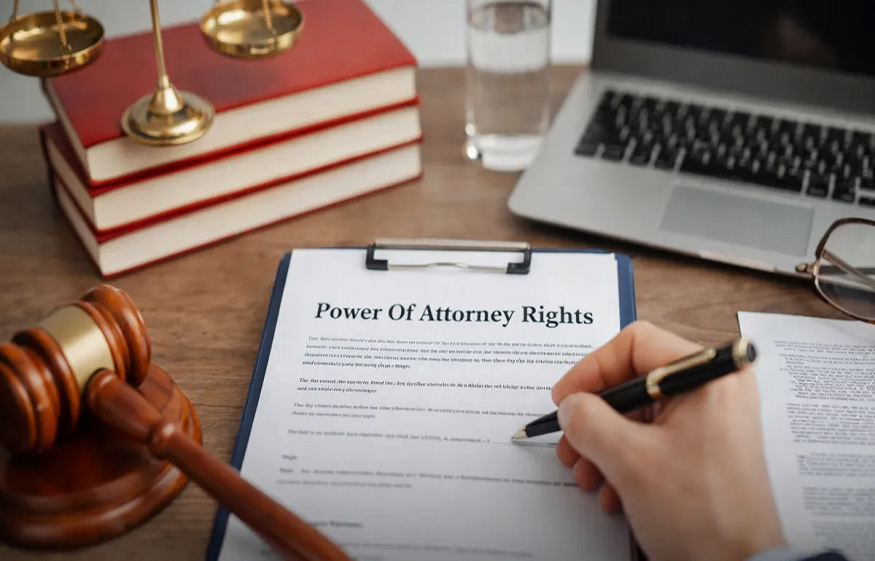
Many people in Dubai need someone they trust to act on their behalf. This could be for property, business, banking, or legal matters. A Power of Attorney (POA) allows another person to legally represent you. However, if it is prepared incorrectly, it may be rejected by banks or government departments.
Under Cabinet Resolution No. (16) of 2024, a Power of Attorney must be notarized according to federal rules. The notary verifies identity, confirms legal capacity, and registers the document in the official system. This means drafting a document alone is not enough. The POA must follow the correct legal process to be valid.
Step 1: Decide the Type of Authority
Before drafting anything, you must clearly decide what powers you want to give. This decision shapes what your agent can legally do on your behalf.
There are two main types of authority under UAE practice:
General Power of Attorney
This gives broad authority. Your agent can manage multiple matters such as banking, property management, business transactions, government filings, and legal representation. It is useful if you are moving abroad, traveling for a long period, or running a business remotely. However, broad authority means broader risk. If the wording is unclear, banks or government offices may question whether certain actions are allowed.
Special Power of Attorney
This gives authority for one specific task or a clearly defined list of actions. For example, selling one property, signing one agreement, or representing you in a single court case. The document must clearly describe the task. Because it is limited and precise, it is often accepted more easily by authorities. For property transactions, a special POA Dubai that includes full property details is usually required.
Selecting the right type helps prevent rejection, delays, or misuse. If you are unsure, it is usually safer to grant limited powers rather than broad authority.
Step 2: Draft the Document Properly
Once you know which type you need, the document must be drafted carefully and clearly.
Under Cabinet Resolution No. (16) of 2024 regulating the Notary Public profession, the notary is required to verify identity, confirm legal capacity, ensure the document complies with UAE law, and register it in the official electronic system. This means accuracy is essential.
The POA must be written in Arabic. If prepared in English or another language, it must be translated into Arabic by a certified legal translator before notarization.
The document should clearly include the full legal names of both parties, Emirates ID or passport details, and a precise description of the powers granted. If the POA relates to property, it should mention the title deed number and location. If it relates to business matters, it should state the company name and registration details.
Step 3: Book a Notary Appointment
A POA in Dubai only becomes legally valid after notarization. In Dubai, notarization can be completed through Dubai Courts Notary Public services or licensed private notaries. Many services now offer electronic notarization, where identity verification and signing take place digitally.
During the appointment, the notary must confirm that you understand the document and that you are signing voluntarily. This requirement, set out in the 2024 regulations, protects against fraud or coercion. The notary will also verify identification documents and ensure the content complies with legal standards.
Once notarized and registered in the official system, your power of attorney in Dubai becomes legally enforceable and can be used before banks, courts, and government authorities.
Step 4: Pay Fees and Receive the Registered Copy
After the notary approves the document, the required government fees must be paid. The notarized POA is then issued either electronically or as an officially stamped document.
The registered version is the legally recognized copy. Authorities will not accept an unsigned draft. It is important to keep both a digital and a printed version for future use.
Step 5: Additional Attestation If Required
If the POA will be used outside the UAE, further attestation may be required. This usually involves authentication by the Ministry of Foreign Affairs and sometimes the embassy of the country where the document will be used.
However, if the POA is intended only for use within Dubai or the UAE, notarization under the federal notary law is generally sufficient. No further legalization is normally required.
Create Your POA The Right Way
Making a Power of Attorney in Dubai is not complicated. However, it must follow the official notarization rules. If the document is unclear, incomplete, or improperly notarized, you may face rejection, delays, or legal disputes. On the other hand, when drafted carefully and notarized correctly, your POA provides security and peace of mind.
Professional services that specialize in Power of Attorney in Dubai handle the entire process efficiently. They ensure correct documentation, proper notarization, and complete registration. This support creates valid POAs that work exactly when you need them.