
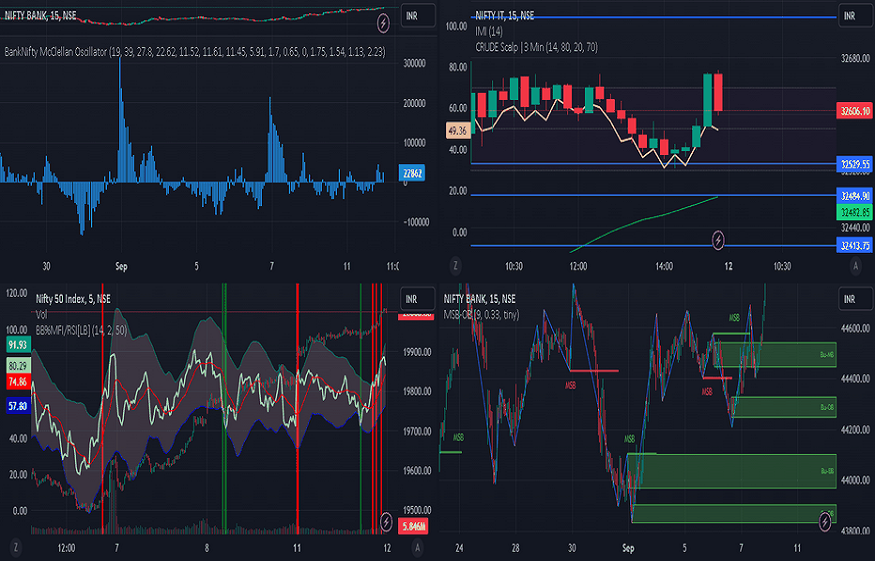
The Indian derivatives market has witnessed remarkable growth as traders and investors increasingly use advanced analytical tools to improve decision-making and market understanding. Many active traders regularly study the NSE Option Chain to evaluate market sentiment, identify important strike prices, and understand potential price movements in the broader market. Similarly, the Sensex Option Chain has become an important resource for market participants seeking deeper insights into index-based trading activity, volatility trends, and institutional positioning within the financial markets.
Growing Popularity of Options Trading in India
Options trading has gained great popularity among retail and specialist investors due to increasing market recognition and smooth access to digital buying and selling systems. Before, derivatives trading became limited to experienced promoters with exceptional market knowledge. Today, advanced times and educational assets have made buying and selling opportunities more accessible to larger target groups.
Investors are increasingly interested in derivatives because they offer flexibility in managing gadget risk, hedging portfolios, and identifying short-term buying and selling opportunities. Traders now study active market data, interest rate movements, and volatility indicators to improve their trading opportunities intelligently.
Read More : What is Included in End-to-End Payroll Management Services
The rise of mobile buying and selling apps and real-time market analysis tools has similarly expanded participation in options trading. Investors can now access live data, display market positions and instantly assess market sentiment through digital systems.
Much progress has also been made in financial literacy. Many investors now recognise the importance of disciplined evaluation rather than relying solely on hypotheses or emotional market reactions.
Importance of Market Sentiment Analysis
Understanding the spirit of the market is one of the most important elements of successful trading. Financial markets are closely motivated by investor expectations, institutional position, monetary developments, and general market position confidence.
Option chain assessment allows traders to capture areas where significant trading interest is focused. Strike fees with higher free interests often result in areas of significant support and resistance that are closely monitored by market players.
This data will be relatively valuable for periods of volatile market conditions because traders can compare where institutional play may affect random interest rate action. Investors who recognise sentiment signals often make more informed trading choices than those who most effectively rely on price cues.
Sentiment analysis also allows traders to continue to be prepared for surprising market swings. Financial markets often react quickly to economic announcements, policy reforms, or international trends, making analytical education extremely important.
Another key benefit of emotion appraisal is emotion regulation. Traders who rely on grounded statistics and disciplined strategies are much less motivated by the use of panic or asymmetric optimism at some stage in normal risky trading sessions.
Understanding Open Interest and Trading Activity
Open interest is one of the most observed markers of options buying and selling because it indicates a series of energetic contracts within the market. Higher open interest for individual strike costs often indicates strong trade participation and market interest at those levels.
Traders closely monitor open interest rate changes to see if sparkling positions are created or current positions are closed. Increasing open interest coupled with rising costs could additionally result in more powerful bullish sentiment, while increasing open interest throughout the rate cut could also reiterate bear market expectations.
Volume analysis is equally important because it allows buyers to make an accurate assessment of market share. Higher buy and sell spreads generally indicate stronger confidence in the market and liquidity, which are critical for clean trading.
Combining interest rate movements with free interest expansion analysis provides a more complete knowledge of market performance. Traders using two markers together often increase the accuracy of their market analysis.
Role of Technology in Modern Trading Analysis
Technology has completely changed the pleasure of trading by making real-time market data easily accessible to retail investors. In the past, emerging derivatives valuations have moved to be publicly available to institutional participants and professional industry associations. Today, male or female traders can access specialised market analysis through modern buying and selling systems.
Digital buying and selling tools now provide real-time option chain reporting, volatility estimation, free interest rate tracking, and better charting capabilities within seconds. This accessibility has improved market participation and encouraged greater economic awareness among investors.
Automated alerts and customizable dashboards help traders monitor required market positions effectively. Investors may now want to rely entirely on manual calculations or not on time-market statistics.
In addition to technology, there is progress in educational access. Many traders are now researching better analytical standards through digital systems, webinars, and market research tools. This developing knowledge has contributed to extra-disciplined buying and selling behaviour within the retail industry.
Another main advantage of time is speed. Real-time execution and available instant facts help buyers quickly react to changes in market conditions at all levels with added efficiency.
Importance of Risk Management in Options Trading
Options trading offers significant opportunities but also poses widespread risk if not handled carefully. Market volatility creates rapid payment changes that make disciplined probability management necessary for long-term business success.
Successful traders usually declare pure entry points, stop losses, and risk size before executing the trade. These measures help preserve capital during the course of adverse market actions and reduce emotional selection formation.
Overtrading, especially in active derivatives markets, is not an unusual activity. Retailers occasionally take excessive risks without proper planning in the face of volatile situations that can cause financial stress to swell significantly.
Diversification and managed risk help improve buying and selling stability. Traders who stay away from focusing all their capital on a single market picture generally maintain greater emotional stability and monetary discipline.
Patience is just as important. Sustainable buy and sell fulfilment generally comes from daily execution and disciplined analysis as opposed to competing assumptions or impulsive decisions.
Future of Data-Driven Trading in Indian Markets
The future of Indian derivatives trading appears highly promising as technology, financial awareness, and digital infrastructure continue evolving rapidly. Traders are increasingly adopting data-driven strategies and analytical tools to improve market understanding and trading efficiency.
Artificial intelligence, advanced analytics, and automated trading systems are expected to play a larger role in shaping future trading practices. Investors are becoming more focused on disciplined analysis, risk management, and long-term consistency rather than purely speculative behaviour.
Read More : ETFs and Portfolio Diversification: Strategies for Investors in Belgium
Educational awareness around derivatives trading is also improving steadily. More traders now understand the importance of market psychology, volatility analysis, and structured trading approaches.
The continued growth of digital trading platforms is likely to attract broader market participation from professionals, entrepreneurs, and young investors interested in financial markets. Traders who combine analytical discipline with strong risk management practices are generally better positioned to navigate market volatility successfully and build long-term trading confidence.